Not every canal home in Cape Coral can reach the Gulf. Freshwater canal homes sit on a landlocked system with no saltwater route out. Gulf-access homes connect, through the canals and the Caloosahatchee River, to open water. And Gulf access does not always mean sailboat access. Here is how to tell the three apart before you fall for the wrong listing.
Short answer: not all Cape Coral canals are the same
Cape Coral has one of the largest canal networks of any city in the world, often described as around 400 miles of waterways. But those canals do not all connect. Some are part of a saltwater system that leads out to the Gulf of Mexico. Others are freshwater canals that stay inside their own basin with no boating route to open water.
So when a listing says “waterfront” or “canal home,” that is the start of the question, not the answer. The real question is what that specific canal connects to, and what kind of boat you can actually run on it. Here is the plain-English version of each tier.
Freshwater canals: what you get, and what you do not
Freshwater canals are landlocked. There is no navigable route from them to the Caloosahatchee River or the Gulf. You will not be taking a boat from your dock out to open water.
That is not a downside for everyone. Freshwater canal homes are often the better fit if you want the water view, quiet mornings, kayaking, paddleboarding, and fishing without paying for a saltwater boating setup you will not use. The water tends to be calmer, and you avoid a lot of the salt-driven wear that comes with coastal boating.
A few things buyers should know:
- You can still use small craft like kayaks, canoes, paddleboards, and many jon boats or small electric-motor boats on freshwater canals. “Freshwater” does not mean “no boats,” it means “no route to the Gulf.”
- Entry prices for freshwater canal homes are generally lower than comparable Gulf-access homes. I keep this qualitative on purpose. The gap moves with the market, so we look at live comps for the streets you are considering rather than quoting a number that goes stale.
- Much of the northeast and northwest Cape runs on well and septic rather than city water and sewer, and most homes in those two quadrants are on it. That affects cost, maintenance, and future utility assessments, so confirm what a specific home has.
If a boat that runs to the Gulf is not on your must-have list, freshwater can get you more house and more lot for the money.
Gulf-access canals: saltwater routes to open water
Gulf-access homes sit on the saltwater canal system. From the dock, the general path runs through the canals, out to the Caloosahatchee River, down through San Carlos Bay, and into the Gulf. That is the appeal: you keep a boat behind your own house and you can be on open water without trailering anywhere. You can see the lifestyle side of this on my waterfront and Gulf-access homes page.
But “Gulf access” is a broad label, and two homes that both claim it can be very different boats’ worth of different. The key split is direct access versus indirect access.
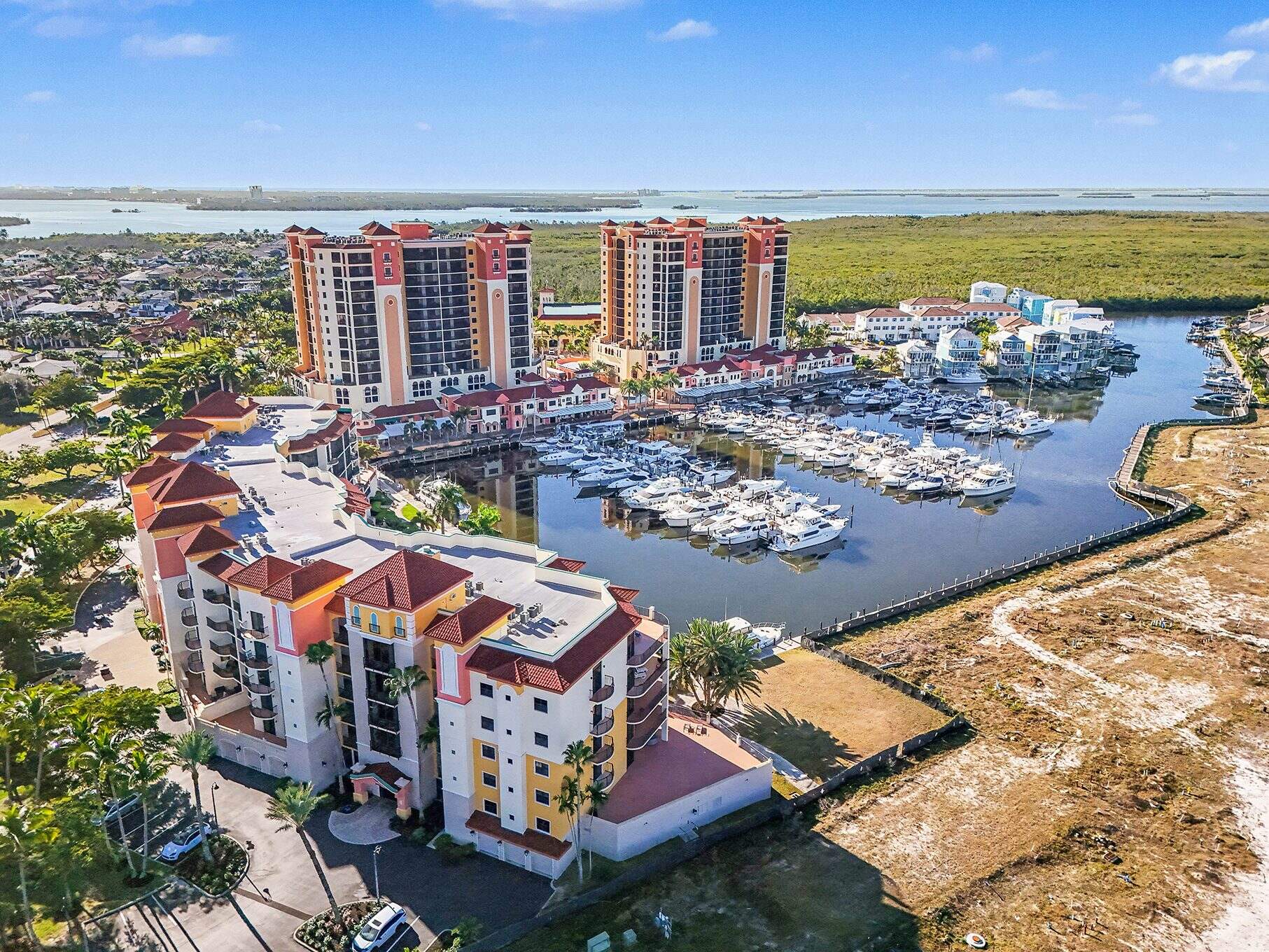
- Direct (or close to it): a shorter, more open run toward the river with few or no obstacles in the way. These tend to command the strongest boating demand and the highest prices. Communities like Cape Harbour and Tarpon Estates are examples of established Gulf-access neighborhoods in the southwest Cape.
- Indirect (bridged) access: the route to open water passes under one or more fixed bridges, and sometimes takes a longer path through the canal system. Still Gulf access, but with real limits on boat height and often a longer ride to the river.
Two honest reality checks before you get attached to a Gulf-access listing:
- Transit time is real. Some Gulf-access homes are a quick run to the river. Others are 30, 45, or more minutes of no-wake canal cruising before you reach open water. Neither is wrong, but you should know which one you are buying.
- The label on the MLS is a starting point. “Gulf access” tells you the water connects. It does not tell you how tall your boat can be or how deep the water is along the whole route. That is the next section, and it is where a lot of buyers get surprised.
Sailboat access, bridge clearance, and depth
This is the part worth slowing down on, because it is where the money mistakes happen.
Air draft versus the lowest fixed bridge. Air draft is how tall your boat is above the waterline. A fixed bridge does not open, so your boat has to fit under the lowest fixed bridge on your route, at the worst-case tide. “Sailboat access” generally means there are no fixed bridges between the home and open water, so a tall mast can clear. On a bridged route, sailboats and many boats with hardtops, tall T-tops, or flybridges simply will not fit under the lowest bridge.
I am deliberately not quoting a single clearance number here, because the figures you will find online conflict, and clearance changes with the tide. The rule that actually protects you is simpler: find the lowest fixed bridge on your specific route, and confirm the clearance at mean high water for the boat you own or plan to buy. One bridge decides the whole route.
Draft, tides, and the full route. Draft is how deep your boat sits below the waterline. A canal can be plenty deep at your dock and shallow somewhere else along the run. Tides move the number too. So we check depth along the entire route to open water, not just the water off the seawall.
Other vertical obstacles. Occasionally there are overhead lines or other fixed obstructions on a route. I will not guess at where those are for any given street. It is simply one more thing to verify per address rather than assume.
The short version: match the boat to the route first, then fall in love with the house.
Locks and route changes buyers still ask about
Older listings and older advice sometimes mention locks in Cape Coral. Here is the current picture.
The Chiquita Lock, which sat on the South Spreader canal in the southwest Cape, was removed in 2025. The city framed it as opening up navigation and helping wildlife, and boaters in that area no longer pass through the lock on the way out. That did re-rate some southwest Cape routes from lock-constrained to lock-free.
What did not change: fixed bridges still define many routes. Removing a lock does not remove a bridge. The Spreader canal itself has no bridges along it, but reaching the Spreader from some of the intersecting canals can still mean passing under a bridge. So the route from your particular dock is what decides your boat, not the Spreader alone. If you see lock language on an older listing or an older blog, treat it as a prompt to confirm the current route status for that address, not as the final word.
Cost of ownership beyond the purchase price
The purchase price is only part of what a waterfront home costs to own. Two homes at the same price can carry very different ongoing costs depending on the water.
Seawalls, docks, and lifts. Most Gulf-access homes have a seawall, and many have a dock and a boat lift. These are real assets and real maintenance items. Saltwater is harder on hardware, lifts, and seawalls than freshwater, so a saltwater setup usually deserves closer inspection. On any waterfront home, budget for a seawall and dock condition check as part of due diligence. I keep the dollars out of this guide on purpose, because a seawall’s cost depends on its length and condition, and I would rather quote your address than a citywide average.
Insurance. This surprises people: the word “canal” is not the main driver of your insurance cost. Flood zone, elevation, and how the home is built matter more. A freshwater home in a high-risk flood zone can cost more to insure than a Gulf-access home that sits higher and drier. Canal type influences the risk picture, but it does not set the premium by itself. The move is to get an actual flood determination and an insurance quote for the specific home before you decide what you can afford.
Maintenance style. Freshwater ownership leans more toward lifestyle upkeep, the dock and the yard. Gulf-access ownership adds the saltwater boating gear to the list. Neither is bad. They are just different, and worth pricing honestly up front.
Resale and who each type serves
Different buyers want different water, so the two tiers tend to serve different demand.
Gulf-access and especially direct or sailboat-access homes draw boaters, and boating demand is a strong, specific pull. Freshwater and view-oriented homes draw a broader group: people who want the water view, the quiet, and the lifestyle without the boating cost.
I am not going to tell you one “always sells faster” than the other, because that depends on price, condition, and the specific street, and I would rather show you real comps than a slogan. What I will say is that matching the home to the right buyer pool, boaters for the boating tiers, lifestyle buyers for freshwater, is what protects your resale.
How to choose: a simple framework
Work it in this order and the decision gets easy:
- Start with the boat. What do you own or plan to own, and how tall and deep is it? Or are you honestly not a boater? That single answer eliminates whole tiers.
- Pick the access tier that fits the boat. No boat or small craft: freshwater is on the table. A boat that needs to reach the Gulf: Gulf access. A sailboat or a tall hardtop: sailboat access with no fixed bridges.
- Layer in budget and insurance comfort. Set your all-in number using a real flood determination and insurance quote, not just the list price.
- Then choose the neighborhood. Once the water tier is set, we match it to the areas and communities that fit your budget and how you want to live.
If you are buying from out of state, my buyer and relocation pages walk through how that works start to finish.
Quick comparison
| Freshwater canal | Bridged Gulf access | Sailboat / direct-style access | |
|---|---|---|---|
| Boat reality | Kayaks, paddleboards, small boats. No route to the Gulf. | Reaches the Gulf, but boat height is limited by the lowest fixed bridge. | Reaches the Gulf with no fixed bridges. Fits tall boats and sailboat masts, depth permitting. |
| Typical lifestyle | Views, quiet water, fishing, paddling. | Powerboating to open water with some route limits. | Serious boating and sailing, quickest and most open runs. |
| Cost and maintenance | Generally lowest entry cost; less saltwater wear. | Middle; saltwater seawall, dock, and lift upkeep. | Generally highest cost; premium boating setup and demand. |
| Best for | Buyers who want the water without a Gulf boat. | Boaters flexible on boat height and transit time. | Boaters and sailors who need full, unobstructed access. |
Treat every cell as a general pattern. The only thing that governs a specific home is that specific address and route.
Buyer checklist before you write an offer
Before you offer on any Cape Coral canal home, confirm:
- The water type. Freshwater, or Gulf access. Do not assume from “waterfront” alone.
- The full route to open water. Not just the view off the dock.
- Every fixed bridge on that route, and the clearance at mean high water for your boat.
- Water depth along the whole route, at low tide, for your boat’s draft.
- Seawall, dock, and lift condition, with a proper inspection.
- Flood zone and elevation, with an actual flood determination.
- A real insurance quote for that specific home.
- HOA, deed, and community rules that could limit docks, lifts, or boat size.
- Water and sewer versus well and septic, especially in the NE and NW Cape, where most homes are on well and septic.
If you cannot check one of these yourself, that is exactly what I am here for.
FAQ
What is the difference between a freshwater canal and a Gulf-access canal in Cape Coral?
A freshwater canal is landlocked, with no boating route to the Gulf. A Gulf-access canal connects, through the canal system and the Caloosahatchee River, to open water so you can run a boat out to the Gulf.
Does “waterfront” or “canal home” mean I can boat to the Gulf?
No. Those words only tell you the home sits on water. Plenty of Cape Coral canal homes are freshwater and have no route to the Gulf. Always confirm the water type for the specific address.
What does direct versus indirect Gulf access mean?
Direct access is a shorter, more open run toward the river with few or no obstacles. Indirect, or bridged, access still reaches the Gulf, but the route passes under one or more fixed bridges and often takes longer.
What is sailboat access, and how is it different from Gulf access?
Sailboat access generally means there are no fixed bridges between the home and open water, so a tall mast can clear, as long as the water is deep enough. General Gulf access may still have fixed bridges that limit boat height.
Can I keep a sailboat or a tall hardtop on a bridged Gulf-access canal?
Usually not. A fixed bridge does not open, so a tall boat has to fit under the lowest bridge on the route. Sailboats and many tall hardtops or flybridges will not clear a bridged route. Confirm the lowest bridge before you buy.
Can you use small boats on a freshwater canal?
Yes. Kayaks, paddleboards, canoes, and many small or electric-motor boats are fine on freshwater canals. You just cannot take them out to the Gulf.
Where are freshwater versus Gulf-access canals in Cape Coral?
As a general pattern, freshwater canals are more common in the northeast and parts of the northwest Cape, and Gulf-access corridors are more common in the southwest and southeast. This is a pattern, not a rule, so verify the actual water type street by street.
What happened with the Chiquita Lock?
It was removed in 2025 from the South Spreader canal in the southwest Cape, which opened up some routes that used to pass through the lock. Fixed bridges still define many routes, so the bridge-clearance and depth questions still apply.
Does a canal home cost more to insure?
Not necessarily because of the canal. Flood zone, elevation, and construction usually drive the premium more than the water type. Get a flood determination and a real quote for the specific home.
What is the most important thing to check before buying a canal home?
Match your boat to the route. Confirm the water type, the lowest fixed bridge, and the depth along the entire route to open water before you write an offer.
Let’s match you to the right water
Tell me your boat type, or tell me you do not want a boat, plus your budget. I will show you only the canal tier that actually fits, and skip the listings that would waste your time.
If you are relocating from out of state, I do this over video and in person all the time, and I will map the water before you ever get on a plane. If you already own a Cape Coral home and think it might be the wrong tier for your goals, I can give you a straight read on value too.
Start a VIP home search filtered to the access type you want, or ask me for a home valuation if you are thinking about selling.
Brenton Miebach Call or text: 239-990-7738 Email: brenton@brentonmiebach.com