
Cape Coral has more than 400 miles of canals because the land had to be dug up before it could be built on. The ground was too low and wet for houses. Dredges dug the canals and used the dirt to raise the lots. The canals were part of the plan from the start. This page is part of our history of Cape Coral.
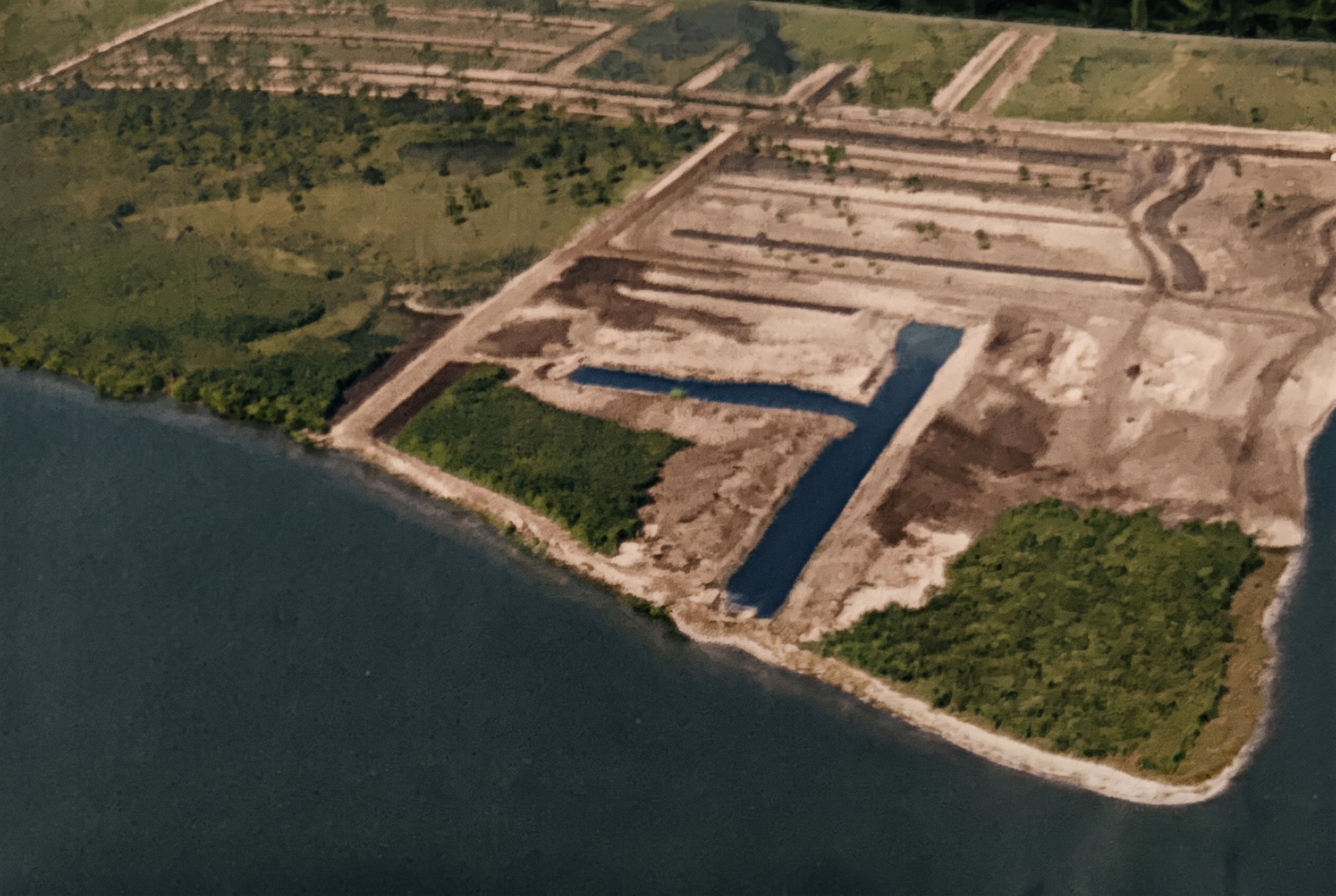
Photo: Redfish Point in 1958, with the first canals and the yacht basin channel under way. Restored and colorized from Lies That Came True by Eileen Bernard. Colors are added digitally.
The land was too low to build on
When the Rosen brothers’ company bought the site in 1957, it was low, wet scrub. The book Lies That Came True says solid limestone lay about 5 feet under the surface. Houses with septic tanks need higher ground than that. The Cape Coral Historical Museum says the lots were built up to 5½ feet above sea level. The book gives about 5 feet 6 inches, which is the same height.
How the dredges made land and canals at the same time
The company used dredges, which are floating machines that scoop up the bottom. The book describes one named Sandy. It says Sandy was 52 feet long and could dig down 26 feet. Each scoop of dirt made a canal deeper and raised the lot beside it.
That meant the company did not have to haul dirt in from somewhere else. The book quotes a foreman saying the company never had to buy “a spoonful of fill dirt.” The canals were the borrow pit and the street map in one.
How many miles of canals are there?
The Cape Coral Historical Museum says the city has more than 400 miles of canals. That is the figure most often quoted, and it is the one we use.
Why some canals reach the Gulf and some do not
Not every canal in Cape Coral leads to open water. Some connect to the Caloosahatchee River and then the Gulf of Mexico. Others are freshwater canals that are cut off from that saltwater system, so a boat cannot take them to the Gulf. Both kinds look similar in a listing photo. Our guide to Gulf access versus freshwater canal homes explains the difference.
What this means if you are buying on a canal today
This history explains why canal lots are everywhere, and why the details matter from one canal to the next. Use this checklist when you look at a canal home:
Canal home checklist
- Ask whether the canal is Gulf access or freshwater, and confirm it on a map.
- Ask how long the boat ride to open water takes, and whether any bridges or low spots are along the way.
- Ask about the age and condition of the seawall.
- Check the flood zone and get a flood insurance quote before you make an offer.
- Ask what dock and boat lift permits are in place.
To see homes with confirmed Gulf access, browse our waterfront Gulf access homes. For a wider look at the city, see our Cape Coral area guide.
Cape Coral canals FAQ
Why does Cape Coral have so many canals?
The land was too low and wet to build on. The developer dug canals with dredges and used the dirt to raise the lots, so the canals and the building sites were made together.
How many miles of canals does Cape Coral have?
The Cape Coral Historical Museum says more than 400 miles.
Who dug the canals?
Gulf American Land Corporation, the Rosen brothers’ company, dug them with dredges as it prepared lots for sale. The first ground was broken in November 1957.
Are the canals natural?
No. They were dug by machine. The area was scrub and low ground before the dredges arrived.
Do all Cape Coral canals reach the Gulf?
No. Some connect to the river and the Gulf. Others are freshwater canals that boats cannot take to open water. Confirm the type before you buy.
Sources
- Cape Coral Historical Museum, History of Cape Coral
- Eileen Bernard, Lies That Came True (book)
Eileen Bernard worked in Gulf American’s publicity department, so her book is an insider’s account of Cape Coral’s early years. We use it alongside the other sources listed here.

Brenton Miebach, REALTOR®
Southwest Florida Lifestyle Living, eXp Realty. Helping buyers and sellers in Cape Coral, Fort Myers and Estero. Call or text 239-990-7738 or email brenton@brentonmiebach.com.
Next step
Check the water before you fall for the house.
Gulf access, bridges, seawalls and flood zones change what a canal home is worth to you. See homes where the water access is confirmed.
See Gulf access homes