The Caloosahatchee River, the water Cape Coral sits on, has drawn anglers for well over a century. Thomas Edison fished it from his Fort Myers winter home, the area helped launch American tarpon fishing in the 1880s, and the river is still home to the giant, now endangered, smalltooth sawfish. This page is part of our history of Cape Coral.
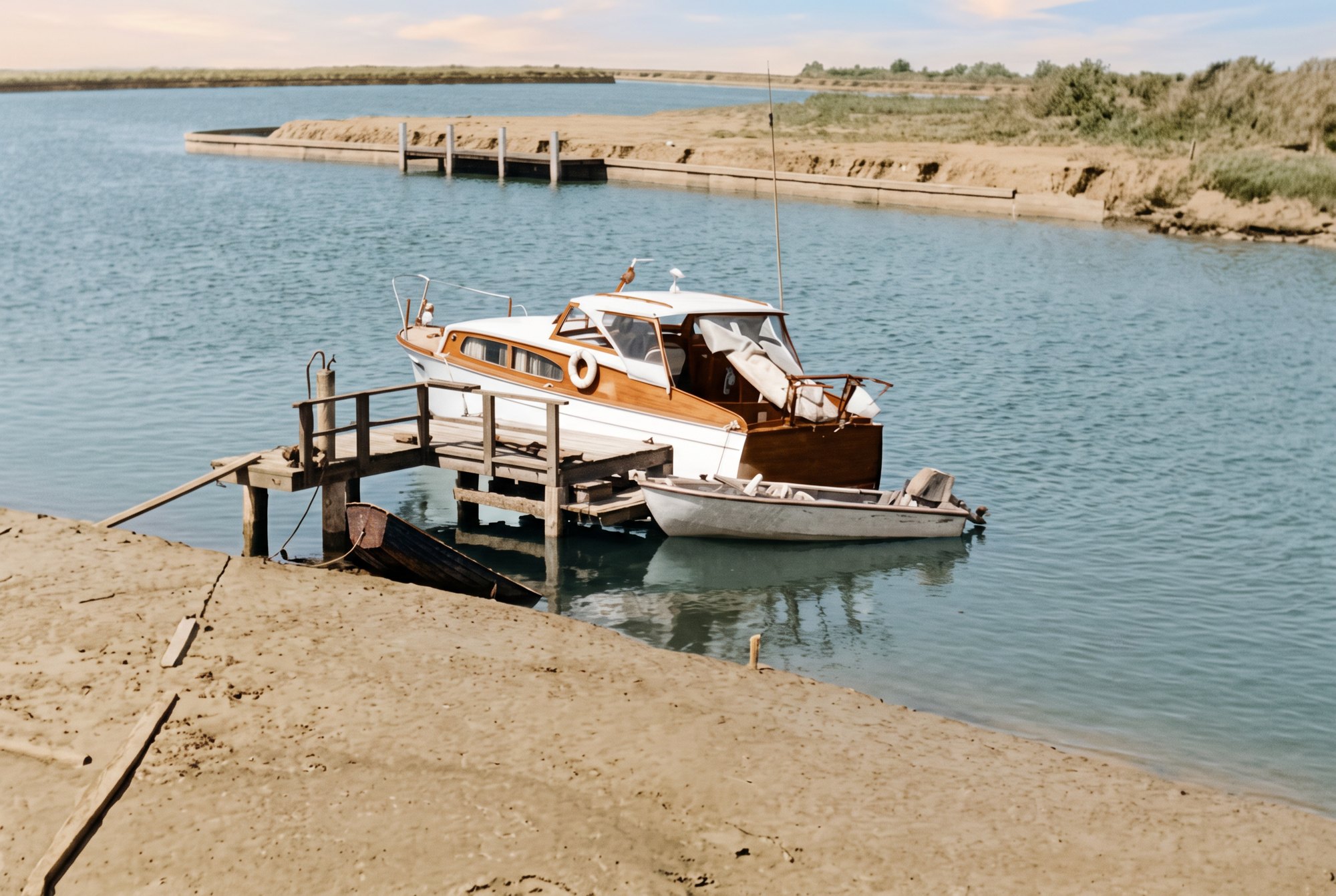
Photo: A cabin cruiser on the Caloosahatchee in 1958, the river that has drawn anglers for generations. Restored and colorized from Lies That Came True by Eileen Bernard. Colors are added digitally.
Edison on the river
Thomas Edison kept a winter home in Fort Myers, on the Caloosahatchee, and he loved to fish it. The Edison and Ford Winter Estates records a family fishing trip on the river aboard their boat, the Mina, in 1903. In 1912 Mina Edison even wrote to the United States fisheries office about restocking the river so the family could keep catching fish.
The river that runs past Cape Coral is the same one the Edisons fished more than a hundred years ago.
Where tarpon fishing began
This stretch of coast helped start big game fishing in America. The first tarpon landed on a rod and reel is often credited to William Halsey Wood in 1885, in the waters near the mouth of the Caloosahatchee, by Sanibel. News of the catch helped turn Southwest Florida into a destination for anglers from around the world.
Either way, the area built an early name for its fishing.
The giant sawfish
The strangest giant in the river is the smalltooth sawfish, a relative of sharks and rays with a long, toothed snout. It can reach about 18 feet, with historic reports even longer. It was once common along this coast.
Today it is rare. In 2003 the smalltooth sawfish became, by most accounts, the first marine fish protected under the federal Endangered Species Act. The Florida Fish and Wildlife Conservation Commission studies young sawfish in the Caloosahatchee and nearby waters. It is now against the law to catch or harm one.
The book tells of a sawfish of around 590 pounds taken near here in the late 1960s. The sawfish itself still swims the river.
The river today
The Caloosahatchee is still central to life in Cape Coral, for boating and fishing alike. To see how the city grew up around the water, read why Cape Coral has so many canals and explore the area below.
Caloosahatchee fishing FAQ
Did Thomas Edison fish the Caloosahatchee?
Yes. Edison kept a winter home in Fort Myers on the river and loved to fish it, per the Edison and Ford Winter Estates.
Where was the first tarpon caught on rod and reel?
It is often credited to William Halsey Wood in 1885, in the waters near the mouth of the Caloosahatchee by Sanibel.
What is the big sawfish in the Caloosahatchee?
The smalltooth sawfish, a shark relative that can reach about 18 feet. It is now critically endangered and federally protected.
Can you catch a sawfish?
No. The smalltooth sawfish is protected under federal law, and it is illegal to catch or harm one.
Was a 590-pound sawfish caught here?
The city’s history book tells of one, taken near here in the late 1960s.
Sources
- Edison and Ford Winter Estates, the Edisons and the Caloosahatchee
- Florida Museum of Natural History, smalltooth sawfish
- Florida Fish and Wildlife, sawfish research
- Florida Sportsman, Southwest Florida tarpon history
- Eileen Bernard, Lies That Came True (book)
Eileen Bernard worked in Gulf American’s publicity department, so her book is an insider’s account of Cape Coral’s early years. We use it alongside the other sources listed here.

Brenton Miebach, REALTOR®
Southwest Florida Lifestyle Living, eXp Realty. Helping buyers and sellers in Cape Coral, Fort Myers and Estero. Call or text 239-990-7738 or email brenton@brentonmiebach.com.
Next step
Curious about Cape Coral today?
Our Cape Coral area guide covers the neighborhoods, the water and what living here is like.
Explore Cape Coral