Gulf American sold Cape Coral with one of the biggest land sales campaigns in the country. It billed the place as a Waterfront Wonderland, sold lots across the nation by mail on monthly payments, flew buyers in for free, and closed deals over dinner. In its first months, the company said sales passed five million dollars. This page is part of our history of Cape Coral.
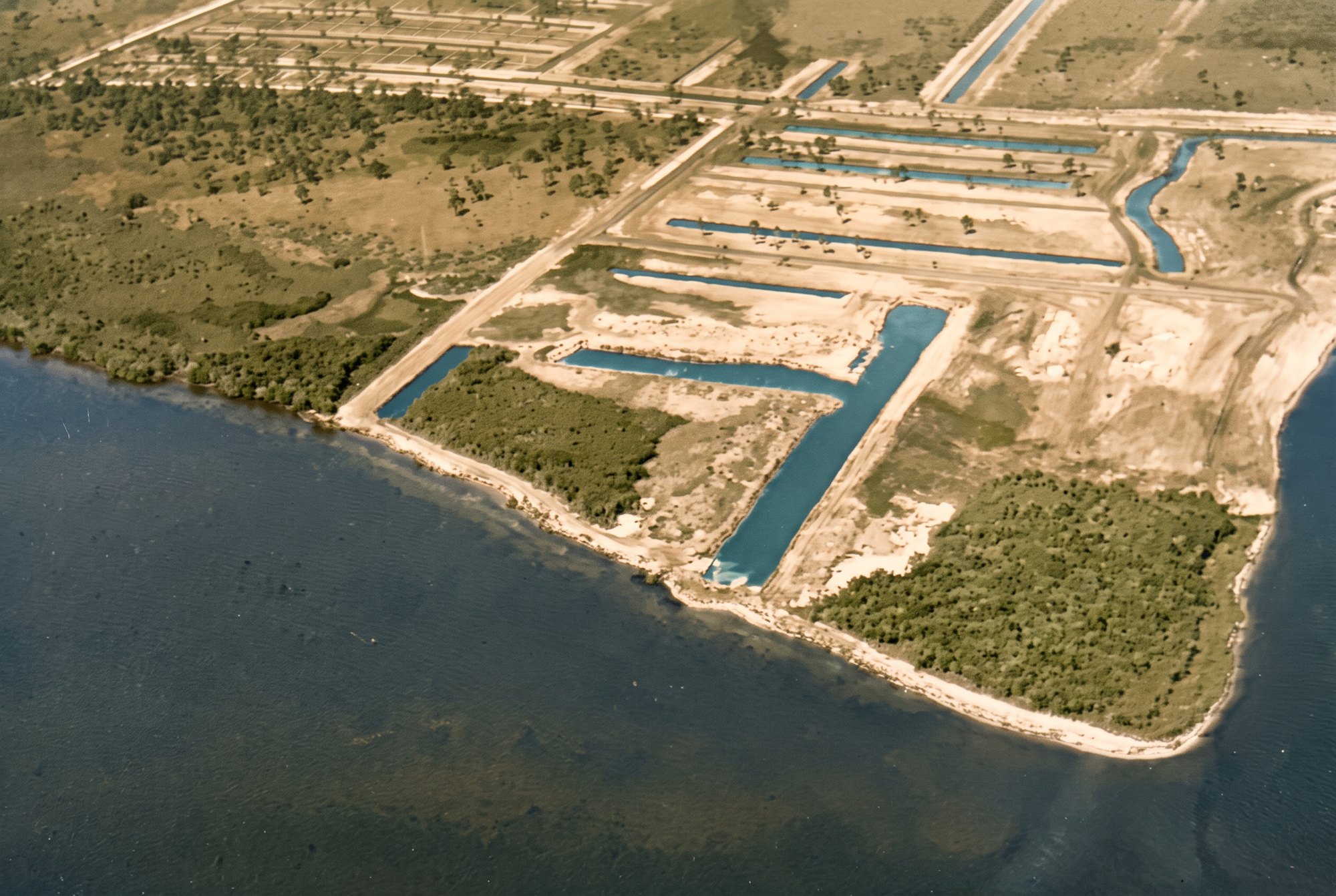
Photo: Redfish Point on the Caloosahatchee River in 1958, with the first canals and lots cut into the land that Gulf American sold as a Waterfront Wonderland. Restored and colorized from Lies That Came True by Eileen Bernard. Colors are added digitally.
The Waterfront Wonderland campaign
Gulf American, the company the Rosen brothers built, called Cape Coral a Waterfront Wonderland. It ran ads in newspapers and magazines across the country and mailed brochures to homes far from Florida. The pitch aimed at buyers in the Northeast and Midwest, at military families, and even in Canada, people who wanted a warm place to retire or own a second home.
The idea was simple. Buy a lot now, while prices are low, in a city being built on the water.
Buy by mail, pay by the month
Much of the selling was done by mail. A buyer could pick a lot from a brochure and pay a small amount down, then so much a month. The company pioneered selling undeveloped land this way, on the installment plan. That let people of modest means buy a piece of Florida.
For what those lots cost, see what a Cape Coral lot cost in 1959.
Free flights and dinner sales
Gulf American also brought buyers to the land. It flew people in for free to see Cape Coral from the air, in what became one of the largest free flight programs anywhere. It ran free buses from Fort Myers. See the free airplane rides that sold Cape Coral.
It sold at dinner too. The company held dinner events in hotel banquet rooms, with a free meal and a team of salespeople who worked to close a sale in about an hour and a half.
How big it got
The campaign worked. By most accounts Gulf American became the largest land sales company in the United States in the late 1950s and 1960s. Sources say sales passed five million dollars in the first five months of 1958. One account says the company reported twenty million dollars in sales by November 1959. Its offices spread across two dozen states.
The book adds its own figures, a mailing list that grew from 70,000 names toward half a million, and about 100 brokers who each had to visit and buy a lot themselves.
The six month look
For buyers who had never seen their lot, the company offered a money back window. Buyers could cancel within six months if they were not satisfied. The book calls this an inspection privilege and says a buyer could keep the lot, exchange it, or get a refund.
Any lot or home today should still be checked on its own records. See who developed Cape Coral for how that history is handled now.
Waterfront Wonderland FAQ
How did Gulf American sell Cape Coral?
By a national campaign: ads and mailed brochures, lots sold by mail on monthly payments, free flights to see the land, free buses, and dinner sales events.
What does Waterfront Wonderland mean?
It was Gulf American’s slogan for Cape Coral, a city being built on the water with canals and waterfront lots.
How much did Cape Coral sell in the early days?
Sources say sales passed five million dollars in the first five months of 1958. One account says the company reported twenty million by November 1959.
Could buyers get their money back?
Yes. The company let buyers cancel within six months if they were not satisfied. The book calls it an inspection privilege to keep, exchange, or refund.
Sources
- Wikipedia, Gulf American Land Corporation
- Wikipedia, Cape Coral, Florida
- Cape Coral Museum of History, history of Cape Coral
- Captiva and Sanibel Island Sun, Cape Coral, a dream taking shape
- Eileen Bernard, Lies That Came True (book)
Eileen Bernard worked in Gulf American’s publicity department, so her book is an insider’s account of Cape Coral’s early years. We use it alongside the other sources listed here.

Brenton Miebach, REALTOR®
Southwest Florida Lifestyle Living, eXp Realty. Helping buyers and sellers in Cape Coral, Fort Myers and Estero. Call or text 239-990-7738 or email brenton@brentonmiebach.com.
Next step
Thinking about moving to Cape Coral?
Our relocation guide covers costs, neighborhoods, flood zones and what to ask before you pick a home.
Read the relocation guide