The ground under Cape Coral is part of Florida’s Ice Age fossil country. Mammoths, mastodons and other large animals once roamed this part of the state. In 2018, workers digging in Cape Coral found a bone that experts believe came from a mammoth. The book that tells the city’s story also says dredge crews turned up old bones in the 1950s. This page is part of our history of Cape Coral.
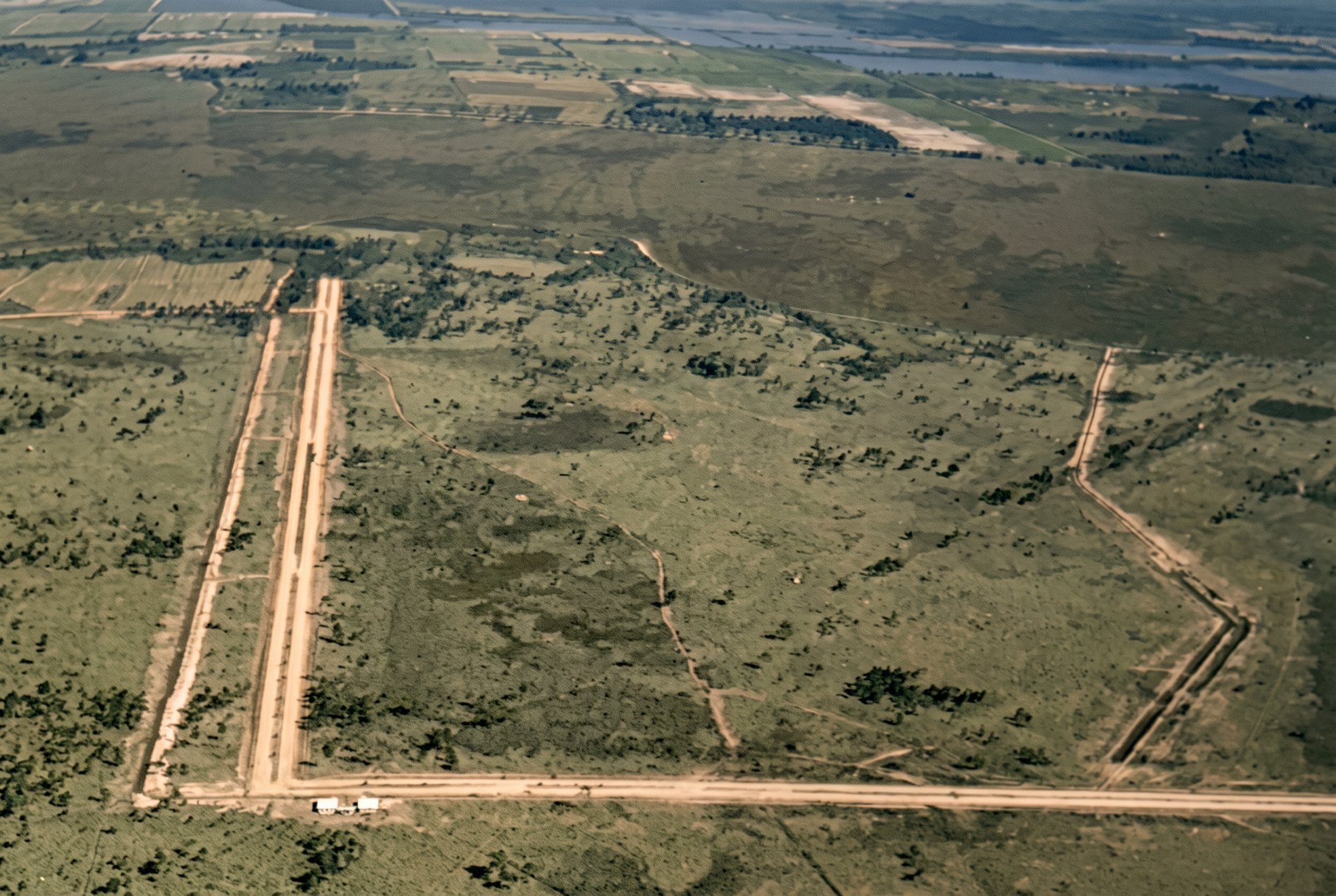
Photo: The Cape Coral land being cleared and dug in the late 1950s, the era when the book says crews turned up old bones. Restored and colorized from Lies That Came True by Eileen Bernard. Colors are added digitally.
What is under the ground here
Much of Southwest Florida sits on a layer called the Caloosahatchee Formation. The United States Geological Survey dates it to the late Pliocene and Pleistocene, the last few million years. It is named for the places it shows along the Caloosahatchee River in Lee County, the same river Cape Coral sits on. It is an old sea bottom, rich in shells and the remains of sea life.
Florida was once higher and drier than it is now, and at other times under the sea. That mix is why the ground here holds both sea shells and the bones of land animals.
Florida’s Ice Age animals
During the Ice Age, Florida was home to large animals that are now extinct. The Florida Museum of Natural History lists the Columbian mammoth, the American mastodon and the giant ground sloth among them. Camels, horses, tapirs and the saber-toothed cat lived here too.
These animals left bones across the state. Finding Ice Age bones in Southwest Florida is not a surprise. It is what the ground here does.
The 2018 mammoth bone
The best-known find came in 2018. Utility workers digging a trench about 17 feet down in Cape Coral found a bone about a foot long. Robert Carr of the Archaeological and Historical Conservancy identified it as likely part of a mammoth’s upper front leg. It was given to the Cape Coral Historical Museum.
News reports at the time noted that the Florida Museum of Natural History listed only two recorded mammoth sites in all of Lee County. That makes the Cape Coral mammoth bone a rare find.
The stories from the dredging days
The book Lies That Came True tells older stories. It says that when the dredges cut the canals in the late 1950s, crews turned up bones, including a mammoth tooth and the remains of other large animals, plus two old human skeletons.
They are some of the most colorful stories from the dredging days.
The people who were here first
The Calusa were the Native people of Southwest Florida. The Florida Museum says they lived here from about the year 100 to the mid-1700s, across a large area of the southwest coast. Their history is well recorded across Southwest Florida.
For how the land was dug and filled to build the city, see why Cape Coral has so many canals.
Cape Coral fossils FAQ
Have fossils been found in Cape Coral?
Yes. In 2018, workers found a bone in Cape Coral that experts believe came from a mammoth. It was given to the Cape Coral Historical Museum.
What is the ground under Cape Coral made of?
Much of it is the Caloosahatchee Formation, an old sea bottom rich in shells and fossils, dating to the last few million years per the US Geological Survey.
What Ice Age animals lived in Florida?
Mammoths, mastodons, giant ground sloths, camels, horses, tapirs and the saber-toothed cat, among others, per the Florida Museum of Natural History.
Did crews find bones while digging the canals?
The city’s history book says dredge crews turned up bones in the late 1950s, including a mammoth tooth.
Who lived in this area first?
The Calusa, the Native people of Southwest Florida, who lived here from about the year 100 to the mid-1700s.
Sources
- US Geological Survey, Caloosahatchee Formation
- Wikipedia, Caloosahatchee Formation
- Florida Museum of Natural History, Florida fossil giants
- Florida Museum of Natural History, the Calusa
- Fox 4, mammoth fossil found in Cape Coral (2018)
- Captiva and Sanibel Island Sun, museum receives the fossil (2018)
- Eileen Bernard, Lies That Came True (book)
Eileen Bernard worked in Gulf American’s publicity department, so her book is an insider’s account of Cape Coral’s early years. We use it alongside the other sources listed here.

Brenton Miebach, REALTOR®
Southwest Florida Lifestyle Living, eXp Realty. Helping buyers and sellers in Cape Coral, Fort Myers and Estero. Call or text 239-990-7738 or email brenton@brentonmiebach.com.
Next step
Curious about Cape Coral today?
Our Cape Coral area guide covers the neighborhoods, the water and what living here is like.
Explore Cape Coral